

Family photos are supposed to preserve real life, but they often end up looking nothing like it.
Everyone is lined up. Someone is forcing a smile. One child is staring at the ground. Another is making a face. A parent is quietly repeating “just one more picture” through clenched teeth while the entire family begins reconsidering the meaning of togetherness.
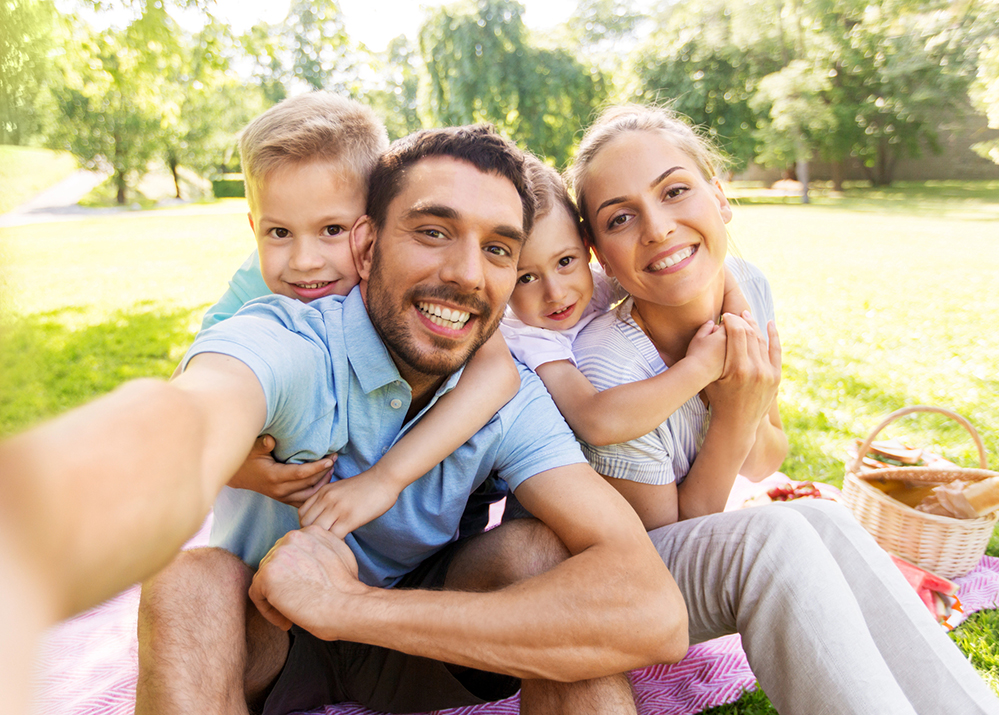
The strange thing is that some of the best family photos happen when nobody is trying very hard to create a perfect family photo.
Natural-looking images usually come from creating the right conditions rather than directing every detail. Good light matters. Comfortable people matter. Timing matters. So does allowing a little imperfection into the frame.
You do not need an expensive camera or professional photography experience to make meaningful family pictures. A smartphone can be more than enough. What matters most is understanding how to help people relax and how to notice moments before they disappear.
Stop Asking Everyone to Smile
One of the fastest ways to make a family photo look stiff is telling everyone to smile.
The instruction seems harmless, but it often produces expressions that look exactly like what they are: expressions created because someone was instructed to produce them.
Instead of asking for a smile, create something worth reacting to.
Tell a joke.
Ask one person to whisper something funny to another.
Have children look at each other instead of the camera.
Ask everyone to squeeze together.
Tell someone to make the most ridiculous face possible and then photograph the moment immediately afterward when everyone starts laughing.
The expression you capture after the posed moment is often much better than the pose itself.
Natural smiles tend to involve the entire face. Forced smiles usually live mostly in the mouth.
If you want people to look happy, give them a reason to feel happy.
Photograph People Doing Something
People often become uncomfortable the moment they realize they are being photographed.
They suddenly do not know where to put their hands.
They become aware of their posture.
They wonder whether they are smiling correctly.
Giving people something to do solves many of these problems.
Have the family walk together.
Let children play.
Bake cookies.
Decorate a tree.
Walk the dog.
Build something.
Read a book.
Sit around a fire.
Play a game.
When people are occupied, they stop thinking as much about the camera.
That gives you a chance to photograph genuine interaction rather than people waiting to hear the next instruction.
Activity also creates visual interest.
Hands have somewhere to go.
People naturally look at each other.
Expressions change.
The photograph begins telling a story.
Look for Good Light Before Looking for the Perfect Background
Lighting has more influence on a photograph than almost anything else.
A beautiful location photographed in harsh light may look worse than an ordinary location photographed beautifully.
If you are indoors, start near a window.
Window light is often soft, directional, and flattering. Turn off harsh overhead lights if they create strange color casts or deep shadows around the eyes.
You do not need people standing directly in front of the window.
Try placing them beside it so the light falls across their faces.
Outdoors, midday sunlight can be difficult because it creates harsh shadows and squinting.
Shade is often easier.
Look for the shadow created by a building, tree, porch, or other large object.
The light in open shade can still be bright enough for a good photograph without forcing everyone to stare into the sun.
Take Advantage of Golden Hour
If you are planning outdoor family photos, the hour before sunset can be especially useful.
The sun is lower in the sky, shadows become softer, and the light often takes on a warmer tone.
You can place the sun behind the family and photograph them with a soft glow around their hair, or position them so the light comes from the side.
You do not need to know complicated lighting techniques.
Just avoid making everyone stare directly toward bright sunlight.
If people are squinting, move them.
Comfort generally produces better pictures than technically perfect positioning.
Choose Comfortable Locations
Natural photos are easier when people feel comfortable.
A familiar park, backyard, living room, kitchen, or favorite walking trail may produce better images than an elaborate location where everyone feels like they are attending a photo shoot.
The location should also allow people to move.
A beautiful but cramped setting may force everyone into one static pose.
An open area gives children somewhere to explore and adults room to interact naturally.
Think about places where your family actually spends time.
Those environments can make photographs feel more personal.
Years later, seeing the old couch, backyard fence, or kitchen table may be just as meaningful as seeing the people.
Keep Clothing Coordinated, Not Matching
Matching outfits can sometimes work, but they can also make family photos feel overly staged.
Instead of dressing everyone identically, choose clothing that feels related.
Pick a loose color palette.
Maybe everyone wears soft neutrals, blues, greens, or warm earth tones.
Mix different shades and textures.
The goal is for the clothing to look harmonious without making the family appear to be members of a very polite uniformed organization.
Avoid extremely large logos, distracting graphics, or patterns that dominate the photograph unless they are intentionally part of the family’s style.
Most importantly, let people wear clothes they are comfortable in.
Someone who dislikes what they are wearing is unlikely to look relaxed.
Let Children Be Children
Children rarely improve family photographs by being told to stand perfectly still.
Young children especially may have only a few minutes of cooperation before the entire concept of photography loses its appeal.
Work with that instead of fighting it.
Let them move.
Let them explore.
Ask them to run toward you.
Have them hug a parent.
Let them climb on something safe.
Ask them to tell a joke.
Photograph them interacting with siblings.
Some of the best images may not include everyone looking at the camera.
A child laughing into a parent’s shoulder can be far more meaningful than a perfectly posed smile.
The goal is not to prove that everyone can remain motionless.
It is to capture who they are.
Photograph the In-Between Moments
People naturally focus on the obvious moments.
The birthday candles.
The first day of school pose.
The holiday dinner.
The family standing in front of a landmark.
Those pictures are important.
But the moments around them can be even better.
Photograph someone tying a child’s shoe before leaving.
Capture siblings laughing while waiting for the official picture.
Photograph a grandparent talking to a child.
Take pictures while everyone is setting the table.
Capture the moment immediately after the candles are blown out.
These images often have a documentary quality because nobody is performing for the camera.
They feel like memories rather than announcements.
Get Closer
Many family photographs include far too much empty space.
The people are tiny in the middle of the frame while most of the image consists of ceiling, grass, sky, or furniture.
Move closer.
Fill more of the frame with faces and interaction.
Photograph hands.
Expressions.
Small details.
A child’s hand holding a parent’s finger.
A grandmother fixing someone’s hair.
Shoes lined up near the door.
These details can become unexpectedly powerful later.
You do not always need everyone visible from head to toe.
Sometimes the story lives much closer.
Step Back Too
Getting close is useful, but variety makes a family photo collection more interesting.
Take wide photographs too.
Show the family walking along a trail.
Include the house in the background.
Capture the entire backyard during a gathering.
Show the surroundings.
Wide photographs provide context.
Years later, the environment may become part of the memory.
That old house may be gone.
The children may no longer be small enough to fit together on the couch.
The park may change.
A strong family photo collection includes both the people and the places where their lives happened.
Change Your Perspective
Most photographs are taken from adult standing height because that is where the photographer happens to be.
Changing your position can immediately make images more interesting.
Kneel down to photograph children at eye level.
Sit on the floor.
Photograph from slightly above while everyone is gathered around a table.
Move behind someone and photograph over their shoulder.
Try shooting through a doorway or between objects in the foreground.
These changes can make images feel more immersive.
Instead of looking at the family from a distance, the viewer feels closer to the moment.
Use Burst Mode for Action
If children are running, jumping, playing, or laughing, one photograph may not be enough.
Use your phone or camera’s burst feature.
Taking several frames in quick succession greatly increases the chance of capturing the exact expression or gesture you want.
This is particularly helpful with young children, whose expressions can change in a fraction of a second.
Do not worry about taking too many pictures.
You can delete the unsuccessful ones later.
Digital photography is very forgiving.
Sometimes the perfect family photograph is frame number seventeen out of twenty.
Do Not Overdirect
Some direction is useful.
“Stand here.”
“Walk toward me.”
“Move closer together.”
That can help create a good composition.
But once everyone is in position, stop controlling every detail.
Let people interact.
If you continually adjust every hand, shoulder, chin, smile, and strand of hair, the family may become increasingly aware of the camera.
Give simple instructions and then observe.
Often the best image appears several seconds after everyone believes the pose is finished.
Use Prompts Instead of Poses
Prompts create action.
Instead of saying, “Everyone smile,” ask the family to do something.
“Everyone look at the person who takes the longest to get ready.”
“Parents, whisper something to the kids.”
“Walk toward me without looking at the camera.”
“Group hug.”
“Everyone look at the youngest child.”
“Try to make each other laugh.”
These prompts create reactions rather than positions.
The result usually feels more spontaneous.
Even when the photographer created the situation, the emotion inside it can still be genuine.
Watch the Background
Natural-looking photographs still benefit from careful composition.
Before taking the picture, glance behind the subjects.
Is there a trash can directly behind someone’s head?
A brightly colored sign?
A pile of laundry?
A tree branch that appears to be growing from someone’s shoulder?
Small background distractions can weaken an otherwise great photograph.
You do not need a perfectly empty background.
You simply want the family to remain the main focus.
Sometimes moving three feet to the left solves the entire problem.
Give People Space to Interact
Families naturally touch.
They lean against each other.
Children climb onto parents.
Siblings bump shoulders.
People hold hands.
Encourage those interactions.
Photographs often feel stiff when everyone stands separately with equal spacing between them.
Bring people closer.
Have someone sit while others stand nearby.
Let a child lean against a parent.
Allow people to overlap slightly.
Physical connection helps communicate emotional connection.
It also creates a more unified composition.
Take More Than the Official Photo
When photographing an important event, do not stop once you have the expected picture.
Yes, take the graduation pose.
Take the birthday picture.
Take the family holiday portrait.
Then keep going.
Photograph the graduate talking to family afterward.
Capture someone opening gifts.
Photograph the kitchen after everyone begins cooking.
Document children playing with wrapping paper instead of the expensive toy that came inside it.
The official photograph records what happened.
The surrounding photographs record what it felt like.
Avoid Excessive Editing
Editing can improve family photographs, but it is easy to go too far.
Small adjustments to brightness, contrast, color, and cropping can make an image stronger.
Heavy filters may make skin tones look unnatural or date the photograph quickly.
Try to preserve the atmosphere of the moment.
If the photograph was taken on a cloudy day, it does not necessarily need to look like a tropical sunset.
If someone’s face has natural lines or freckles, they do not need to disappear.
Family photographs become more valuable over time partly because they preserve reality.
Editing should support the memory rather than replace it.
Include the Person Who Usually Takes the Pictures
Every family has someone who appears to exist primarily behind the camera.
Years later, this can create photo collections in which one parent is mysteriously absent from entire years of family life.
Make an effort to include the photographer.
Use a timer.
Ask another family member to take a picture.
Set the phone on a stable surface.
Hand the camera to someone else.
The photo does not have to be perfect.
Being in it matters more.
Your family will someday want photographs that show everyone who was actually there.
Print Some of Your Photos
Thousands of family photographs now live inside phones and cloud storage accounts, rarely seen after the week they were taken.
Consider printing some.
Create a small photo book each year.
Frame a few favorites.
Keep a box of prints.
Add pictures to an album.
Printed photographs change how people interact with memories.
They can be discovered accidentally.
Children can flip through them.
Guests can see them.
Years later, they become physical objects connected to family history.
The technical quality of the image may matter less than you expect.
A slightly blurry photograph of a wonderful moment may become more meaningful than a technically perfect picture with no story attached.
Do Not Let the Camera Take Over the Experience
There is a strange risk in trying too hard to preserve memories.
You can spend so much time documenting the moment that you barely participate in it.
Take the picture.
Then put the camera down.
Enjoy the birthday.
Eat the dinner.
Watch the game.
Walk the trail.
Talk to people.
You do not need photographic evidence of every minute.
A few strong images can preserve the memory without turning the entire experience into a photo session.
Natural Family Photos Are About Connection
The best family photographs are rarely perfect.
Someone’s hair may be messy.
A child may be laughing too hard to look at the camera.
A dog may wander into the frame.
Someone may be barefoot.
The background may contain a few signs of ordinary life.
Those imperfections are often exactly what make the photograph believable.
Years later, families are unlikely to study these images and complain that everyone’s shoulders were not perfectly aligned.
They will notice how young the children were.
They will remember the house.
They will recognize someone’s laugh.
They will notice the way a parent looked at a child.
That is what natural family photography is really trying to preserve.
Not perfection.
Connection.
If you can create an environment where people feel comfortable enough to forget about the camera for a moment, the photograph often takes care of itself.
