

Why parents are suddenly obsessed with wall panels
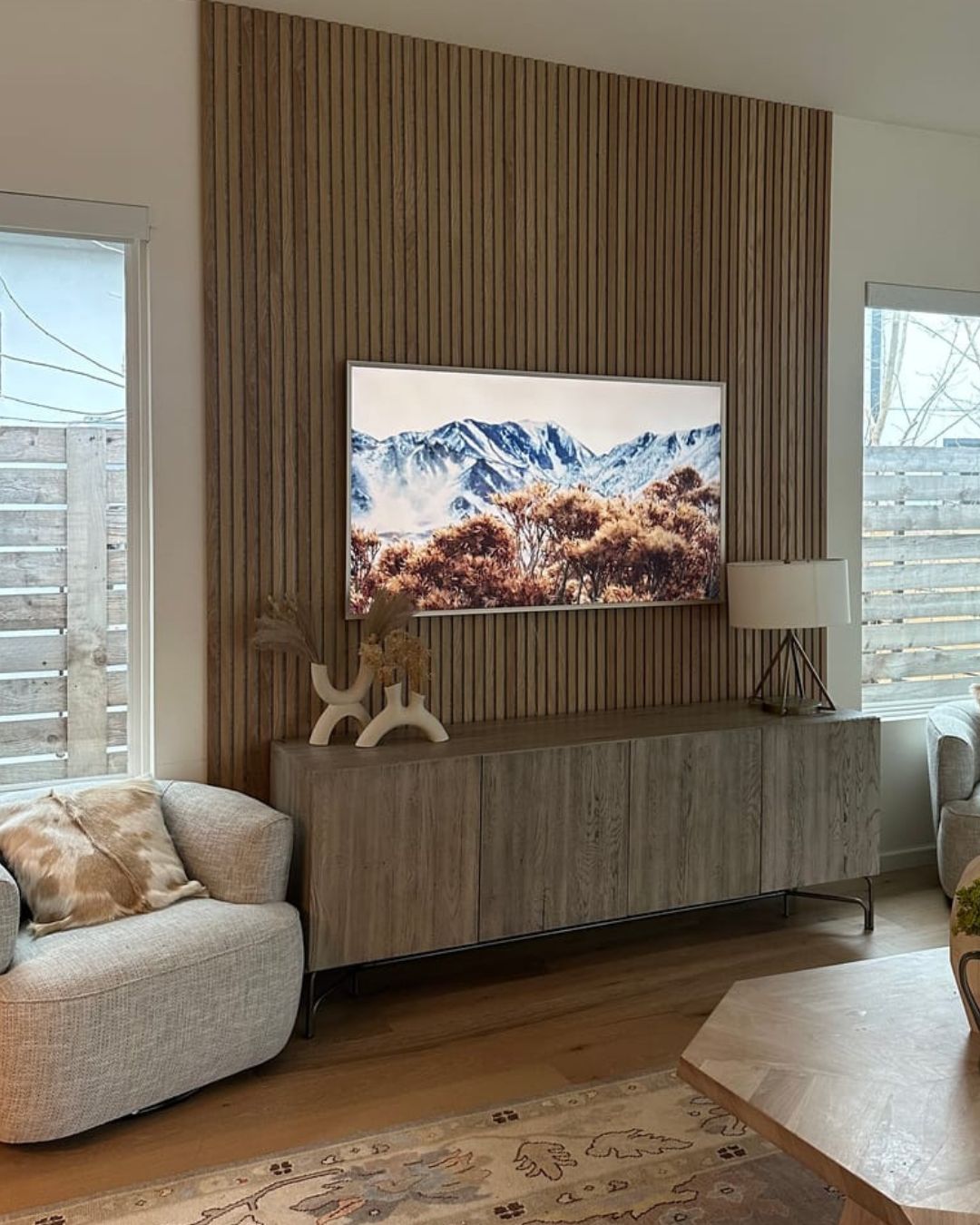
If you scroll through interiors inspiration for more than five minutes, you start to notice the same thing cropping up in every other picture. Timber slats behind the sofa. Half-height panels in the hallway. Moody painted boards in teen bedrooms. There is a reason parents are quietly falling in love with this look. It makes a space feel finished, hides a multitude of scuffs, and stands up to everyday family chaos more gracefully than a plain painted wall ever could.
For families with teens, home is no longer just somewhere to sleep and dump trainers. It is a homework hub, gaming den, TikTok studio, movie room, and occasional place to eat vegetables at the table. Thoughtful detailing like wood panelling gives each area its own personality without needing a full renovation, which is especially useful if you are renting or working with a typical British semi.
Planning a panelled space that works with family life
Before ordering anything, it helps to think less like a stylist and more like a parent who will be wiping ketchup off the walls at 9 p.m. Ask where the real wear and tear happens. Hallways, boot rooms, the wall behind the dining bench, and the narrow space beside the stairs usually take the first hit from muddy shoes, school bags, and sports kit. These are prime candidates for a more durable wall finish.
Next, look at your light. North-facing rooms and those with small windows may feel gloomy if you cover every surface in dark timber. In these spaces, half-height painted panelling with a lighter shade above can add character without swallowing the daylight. South-facing rooms and open-plan spaces, on the other hand, can handle deeper colours and more dramatic texture because they naturally feel brighter.
Choosing the right style for your house, not Instagram
There is a world of difference between skinny vertical slats that feel modern and Scandi, and chunky traditional boards that echo Victorian or Edwardian details. If your home already has original features like picture rails, stained glass, or fireplaces, a simple square or shaker-style panel often looks more natural than ultra-sleek lines. In a newer build with featureless plasterboard, slim vertical slats can add the architecture that the builder never gave you.
It can be helpful to walk through your home and notice the shapes that already exist. Are your doors full of vertical lines or simple flat panels? Do your windows have skinny mullions or chunky frames? Mimicking those proportions in your wall treatment usually makes the whole space feel intentional rather than slapped on for a trend.
Kid-proof, teen-proof and pet-proof decisions
Teenagers bring a particular kind of wear to a house: leaning chairs against walls, dragging rucksacks down hallways, propping bikes indoors “just for a minute”. Parents of younger children will already be familiar with the cereal handprints at toddler height and the scooter scrapes along every surface. The right finish on your panels can make all of that far less stressful.
Look for painted or stained finishes that can be wiped with a mild cleaner, and keep a small pot of touch-up paint in the cupboard for quick fixes. Slightly textured timber has another unexpected benefit in busy homes: it distracts the eye from minor dings. Smooth, flat walls show every mark, whereas a panelled surface looks forgiving, even when real life has happened to it.
Colour choices that grow with your kids
Choosing a colour for a child’s space can feel like a high-pressure decision, especially if you would rather not repaint every two years. Panels give you a smart workaround. Treat the panelling itself as the calm, timeless part of the room and let bedding, posters, and accessories carry the more “of the moment” shades.
Soft greens, warm greys, and deep blues tend to age well and work just as comfortably for a 10-year-old’s room as they do for a student returning from university. In shared family spaces, think beyond standard white. A smoky blue or warm clay colour on the lower half of the wall adds depth and hides scuffs from backpacks and vacuum cleaners while still feeling grown-up enough for evening entertaining.
Making panelling work in teen bedrooms
Teen rooms have to perform a lot of roles in a tiny footprint: study, relax, game, sleep, sometimes even exercise. Panelling can quietly divide the space into zones without moving a single wall. A simple approach is to use vertical panels behind the bed, forming a headboard that visually anchors the sleeping area and stops pillows from constantly knocking paintwork.
On another wall, a half-height panel painted in a darker shade can form the backdrop to a desk zone. It helps screens feel less visually jarring and gives you an obvious line to run a slim shelf or pinboard above. Some families build shallow shelves between slats to display books, headphones, and small plants so that storage becomes part of the wall design rather than an afterthought.
Designing a social media friendly backdrop
Whether you love it or loathe it, teens are filming snippets of life in their bedrooms. Helping them create one “nice” corner is a surprisingly effective way to keep the rest of the house from turning into a full-scale recording studio. A well-considered panelled wall can be that backdrop. It looks interesting on camera without being chaotic and works with changing tastes.
Neutral or muted colours tend to photograph well and do not clash with changing outfits, LED lights, or posters. Good lighting makes a huge difference, so pairing wall panels with a soft, warm desk lamp or string lights along the top rail gives a cosy glow on camera and off. This is a chance to talk about online safety too: encouraging teens to position their camera towards a styled corner instead of broadcasting the entire room.
Living rooms and shared spaces that feel calm again
Open-plan living is brilliant when children are small, but by the time you are parenting teenagers, everyone can start craving corners and boundaries. Using panels strategically can create the sense of separate zones without losing that sociable flow. A slatted feature behind the sofa can signal “this is the lounging area”, while a different style or direction of boards near the dining table quietly marks out mealtimes.
Parents also find that panels improve acoustics in rooms with hard floors and lots of glass. The texture helps to break up echoey surfaces, which makes movie nights and late-night gaming sessions sound a bit softer in the rest of the house. Brands like Akuwoodpanel often highlight this sound-softening effect as much as the visual appeal, something worth bearing in mind if you share walls with neighbours.
Using panelling in hallways, stairs and landings
Hallways absorb the full force of family life. School shoes, football boots, Amazon boxes, and pets all collide in the same narrow space. Panelling up to about one metre high, or a little higher on stairs, gives you a wipeable, hardwearing surface right where it is most needed. It also stops the walls looking battered within six months of repainting.
On landings, panels can add just enough interest to make the space feel deliberate rather than a dumping ground for laundry baskets. A painted rail at the top of the panelling provides a neat line for framed photos, exam certificates, or small mirrors. This keeps precious things away from footballs and over-enthusiastic dogs while still letting you display them proudly.
Practical tips if you are tempted to try it
Measure carefully and sketch your ideas on paper before you touch a single wall. It sounds basic, but checking how panels line up with door frames, window sills, and plug sockets can save you from odd little slivers of timber or awkward gaps. Painter’s tape is surprisingly useful here. Mark out the proposed panel height on the wall and live with it for a couple of days to see how it feels.
Think about future flexibility as well. If there is any chance you might want to change the room layout, avoid building in panels that are tied to one specific furniture arrangement. Classic proportions and simple shapes give you more freedom to shuffle beds, desks, or sofas as the family’s needs change.
Finally, involve your teens in the decision making, especially in their own rooms. Let them choose from a shortlist of colours or decide which wall becomes the feature. When they feel ownership of the design, they are more likely to look after it, and you gain another shared project that is not just about screens or homework.
