

If you live with a teenager, you’ve probably had this conversation at least once.
“Why are you still tired? You slept until noon!”
Cue the sigh. Possibly an eye roll. The duvet goes straight back over their head.
Teenagers have a reputation for sleeping half the day and still claiming they’re exhausted. It’s one of those classic parenting puzzles. In our house the morning routine occasionally involves knocking on the bedroom door more than once, opening the curtains, and still hearing a muffled “not yet…” from somewhere deep underground. And yet… oddly enough… they often really are tired.

Adolescence turns out to be one of the most sleep-dependent stages of life, even though it’s also the time when sleep becomes harder to manage.
Between school schedules, homework, social lives and phones that never seem to leave their hands, sleep often slides down the priority list. Biology plays a role too. During puberty teenagers’ body clocks shift later, meaning they naturally feel sleepy much later in the evening. Early school starts and late teenage body clocks. Not ideal. So yes, teenagers are tired. A lot.
Teenagers Actually Need More Sleep Than Adults
Sleep experts generally recommend that teenagers aged 13 to 18 get around 8 to 10 hours of sleep every night. That’s often more than adults need. But less than teenagers really get.
During adolescence the brain is still under construction. Sleep is when memories are organised, emotions settle down a bit and growth hormones are released. In other words, sleep isn’t just rest, it’s part of how teenagers grow.
Without enough sleep, teens often struggle with concentration, mood swings, learning new information and recovering from growth spurts.
You can sometimes see it in the mornings. They’re sitting at the kitchen table with cereal, staring into space, spoon halfway to their mouth. Technically awake… but… well..
So if your teenager resembles a zombie before 9am, it might not just be their attitude. Biology is probably involved.
Their Body Clock Is Working Against Them
Another complication is that teenagers’ internal clocks shift later during puberty.
The hormone melatonin, that’s the one that signals sleep, often doesn’t start rising until around 11pm in teens. Unfortunately school doesn’t shift along with it. Scientists sometimes call this mismatch “social jet lag.” Teenagers simply don’t feel sleepy as early as younger children. Yet they still have to wake up just as early. Which explains the oddly familiar pattern many parents recognise: wide awake at 10:30pm, impossible to wake up at 7am.

Overheating Is a Real Sleep Disruptor
Something many parents notice during the teenage years is how warm bedrooms suddenly become. Hormonal changes during puberty can increase body temperature and make night sweating more common. If bedding traps heat or doesn’t allow airflow, teenagers may wake up repeatedly during the night without really understanding why.
It sounds minor, but broken sleep adds up. The next day they feel just as tired as if they hadn’t slept enough.
The Bedroom Environment Matters More Than We Think
When we talk about teen sleep, we usually focus on screens and bedtime routines. But the sleep environment itself matters more than people realise.
Things like mattress support, airflow around the body and the materials used in bedding can all affect how deeply someone sleeps. Growing awareness of indoor air quality has also started to influence what families choose for their bedrooms, with more parents looking at natural materials instead of synthetic foams.
A recent European review on indoor air environment found that poor indoor air quality in enclosed spaces can contribute to respiratory irritation and sleep disruption, particularly in children and teenagers. Quite some time ago, the sleep council released a moderately terrifying video about the reason we should change our bed frame as well as our mattress: we write about it at the time, and it’s worth a watch (two baths of body fluids? *shudders* half a ton of dead skin? Ick ick ick…).
For something we spend a third of our lives doing, the bedroom environment doesn’t always get as much attention as it probably should.
A Simple Upgrade: The Wool Mattress Topper
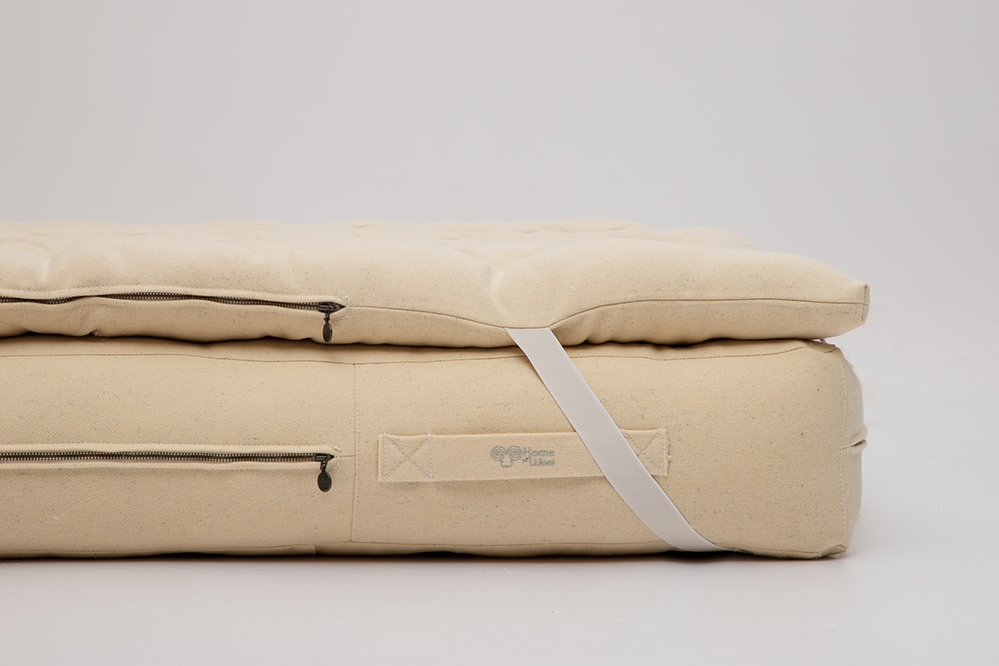
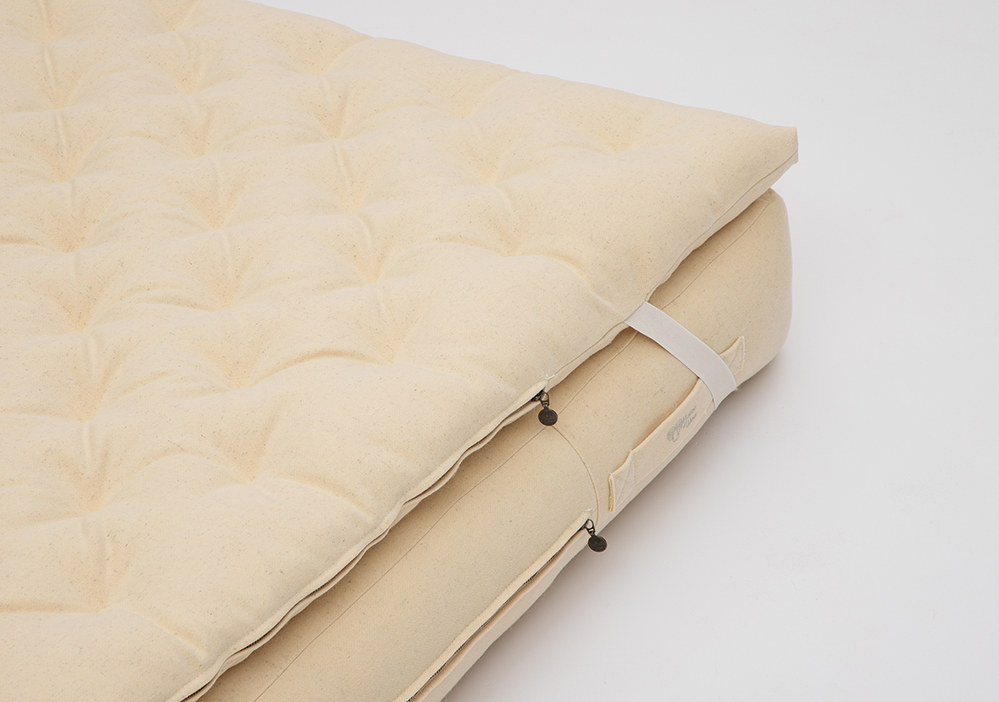
If replacing an entire mattress isn’t realistic, a wool mattress topper can be a practical way to improve the bed without a full replacement. Placed over the mattress, it can soften the feel of the surface while adding breathable temperature regulation, moisture control and extra comfort for growing bodies.
Wool is particularly good at thermal regulation. It helps keep the body warm in winter but cool in summer. It can also absorb moisture without feeling damp, which helps prevent that overheated, sticky feeling that can wake teenagers during the night.
For teens going through growth spurts, that extra cushioning can also make an older mattress far more comfortable.
Another reason many families start with a topper is cost. A topper offers a budget-friendly improvement without replacing the whole bed.
And there’s another bonus parents often discover later. When your teenager eventually heads off to university or student accommodation, the topper can simply be rolled up and taken with them. Anyone who has seen a university mattress knows that a comfortable mattress topper can feel like a small miracle.
Small Bedroom Changes That Can Help Teens Sleep Better
Improving teen sleep doesn’t necessarily mean a full bedroom makeover. Sometimes small changes help more than expected:
• keep the bedroom cool and well ventilated
• choose breathable bedding materials
• check that the mattress still provides proper support
• reduce bright lighting late at night
• create a space that actually feels calm
Teenagers might never admit it, but a bedroom that feels comfortable and relaxing makes it much easier for them to wind down.
The Bottom Line: Teenage Sleep Isn’t Optional
Teenagers sometimes behave as if they can survive on five hours of sleep and an energy drink. Their brains and bodies strongly disagree.
Sleep is one of the most important foundations for healthy development during adolescence. And while convincing a teenager to go to bed earlier may remain a long-term parenting project, creating a better sleep environment can still help.
And if mornings become slightly less dramatic as a result… Well, that’s a win-win!
