

Worried about your child’s gaming? Here’s why you should try playing with them
Online gaming isn’t just entertainment for children. It’s where they make friends, compete, create and feel part of something. But with new research revealing how many children are gaming with people they’ve never met, perhaps it’s time parents stopped watching from the sidelines and picked up a controller.
If you’ve ever tried to persuade a child to come off a game for dinner, you’ll probably recognise the conversation.
“Just five more minutes.”
“I’m in the middle of something!”
“I can’t leave now, I’ll let everyone down!”
To a parent, it can seem ridiculous. It’s only a game, after all. Surely they can just switch it off? But to the child playing, it really isn’t that simple. And understanding why might be the first step towards making gaming a little less of a battleground at home.

Why are video games so hard to put down?
Think about a child learning to score a goal. The first shot misses completely. The second bounces off the post. The third gets tantalisingly close. And then, finally, the ball goes in.
There’s an enormous sense of satisfaction in that small achievement. They’ve practised, improved and succeeded. Naturally, they want to do it again.
Now imagine their friends are watching. They cheer, offer encouragement and congratulate them when they succeed. Suddenly it’s about more than getting a ball into a net. It’s about confidence, belonging and earning the respect of their friends.
Online gaming taps into those same powerful feelings.
Children learn new skills, overcome challenges, work together and enjoy the satisfaction of getting better at something. A difficult level finally conquered, a new character unlocked or a team victory can feel every bit as rewarding as succeeding at a physical game.
And, just like the football pitch, gaming can give children a place in their social group.
The difference is that the digital football club never has to close.
It’s not just a game. It’s where their friends are.
For many children, online games are an extension of their social lives.
Whether they’re building elaborate worlds in Minecraft, exploring Roblox or playing Fortnite with friends, gaming gives them somewhere to meet, chat, collaborate and have fun together.
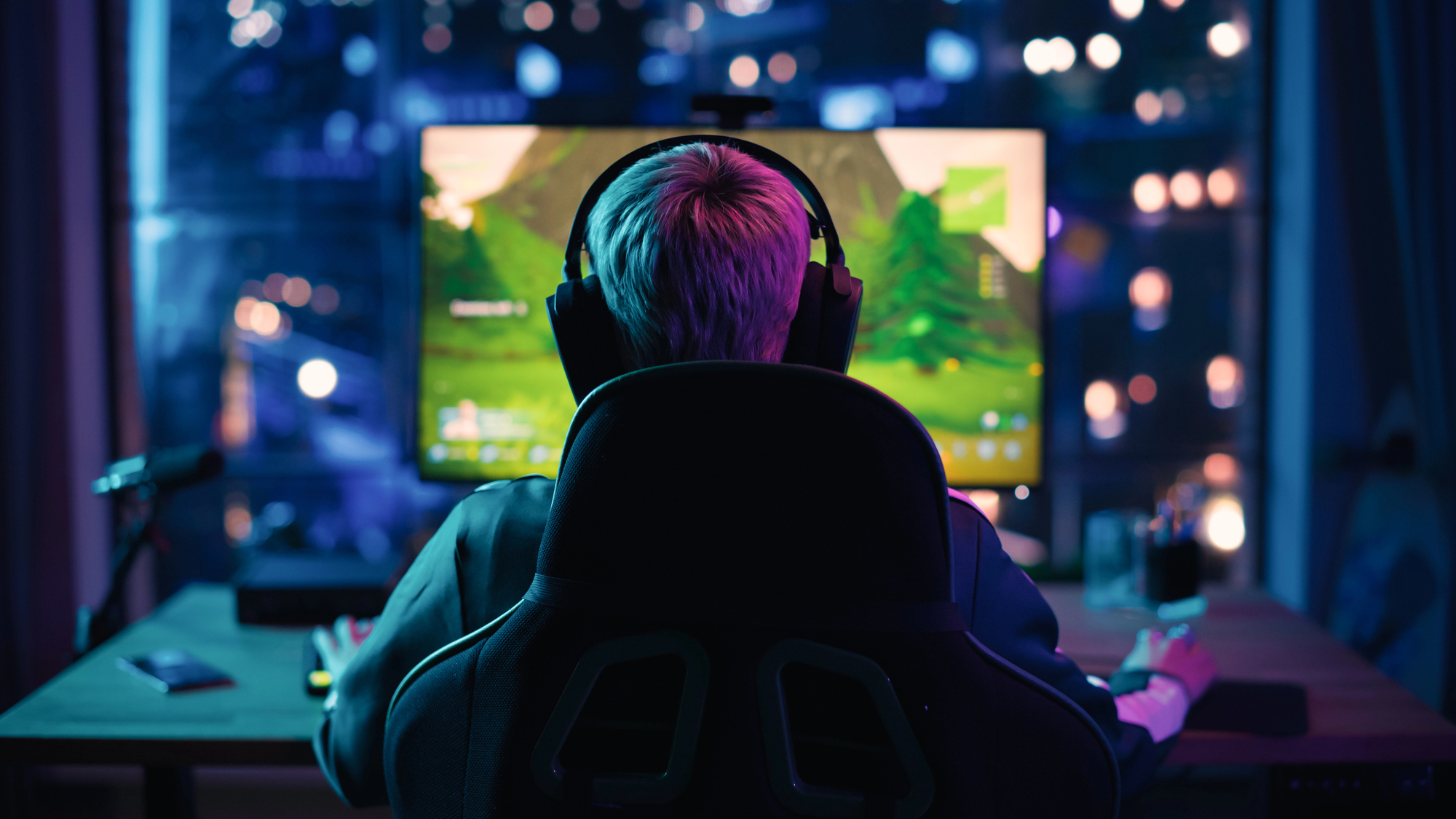
They’re not necessarily sitting alone staring at a screen. They might be laughing with schoolfriends, planning strategies, solving problems or simply catching up on what happened during the day.
This is one reason the familiar instruction to “just turn it off” can provoke such a dramatic reaction.
Imagine being halfway through a football match when someone suddenly takes the ball away and tells everyone to go home. Or having a conversation with your friends abruptly interrupted because somebody else has decided you’ve talked enough.
Of course, children need boundaries around gaming, just as they do around every other activity. But as a parent, recognising its social importance can change the way we approach those boundaries.
It also explains why gaming can be particularly absorbing. Many games offer regular rewards, new challenges, daily incentives and limited-time events. Add the pressure of teammates relying on you, and finding a natural stopping point becomes surprisingly difficult.
That doesn’t mean every enthusiastic young gamer is addicted. It does mean that some games are deliberately designed to encourage players to return, and that children often need help managing their time.
The part parents actually should worry about
While gaming has plenty of positives, there are genuine risks. And the increasingly social nature of games makes understanding them more important than ever.
New Ofcom research, published in October 2026, found that more than half of children who enjoy online gaming play with people they have never met in person.
Two-thirds (64%) of parents of children aged three to 17 who game online were concerned about their child talking to strangers through games or their chat functions.
Yet fewer than half of parents said they had rules about who their child could play with online.
It’s an uncomfortable gap between what worries parents … and what they’re actually doing about it.
And it isn’t necessarily obvious who a child is talking to. Someone appearing as a colourful character in a game could be another nine-year-old, a teenager or an adult. Conversations can happen through text, voice chat and, depending on the game, private messages. Some friendships also move onto other apps and platforms, where different safety settings apply.
Most interactions are perfectly ordinary. But children can encounter bullying, inappropriate conversations, scams or people who aren’t who they claim to be.
Then there’s the money. Games that appear to be free can contain opportunities to spend real money on virtual currency, outfits, accessories, extra features or randomised rewards. Children may not always appreciate how quickly small purchases add up, particularly when prices are expressed in the game’s own currency rather than pounds.
And because games change so quickly, parents can easily find themselves supervising something they don’t fully understand.
Which brings us to a pretty simple suggestion.
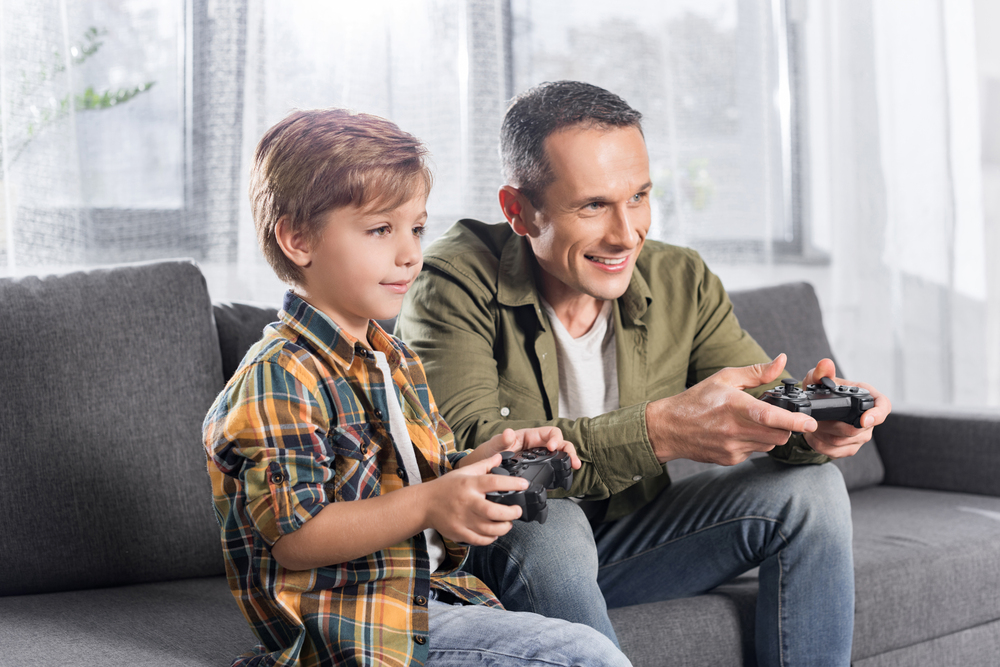
Why parents should try playing video games with their kids
You don’t have to become a gaming expert. You don’t need to understand every character, weapon or obscure bit of gaming terminology.
But you might be surprised how much you discover by asking your child to show you around.
Ask them what they’re playing. What are they trying to achieve? Why do they enjoy it? Who do they play with? What happens when they win, and what happens when they lose?
Better still, ask if you can have a go.
Yes, you will be spectacularly terrible at it. Your child may spend half the time mocking your complete inability to control your character. You will inevitably fall off things, wander in circles or accidentally sabotage their carefully constructed plans.
That’s fine. In fact, it’s pretty much the point.
For once, your child gets to be the expert. They can teach you something, show off their skills and share an activity that matters to them.
And while you’re stumbling around trying to work out which button makes you jump, you’ll be learning too.
You’ll start to understand why a particular achievement matters, why leaving in the middle of a match might upset their friends, and how communication works within the game.
You’ll also be in a much better position to spot anything that makes you uncomfortable.
It’s much easier to have a sensible conversation about online safety when you actually understand the world you’re talking about.
Five things to do when you join your child’s game
You don’t need to overhaul your family’s entire approach to gaming overnight. Start with a little curiosity and a few practical steps.
1. Let your child give you a guided tour
Don’t begin by criticising the game or asking how much longer they’re going to play. Ask them to show you what makes it fun. Let them explain the rules, introduce their favourite characters and demonstrate what they’re good at.
2. Find out who they’re playing with
Are they schoolfriends, friends of friends or people they’ve met entirely online? Can strangers contact them? Is there voice chat? Can other players send private messages?
The answers may vary between games, and even between different parts of the same game.
3. Check the account and safety settings together
Make sure your child’s account has their correct age registered. Look at who can contact them, whether strangers can send friend requests, what information other players can see and whether purchases are restricted.
Remember that privacy and parental controls can change as games and platforms introduce new features. It’s worth checking them regularly.
4. Agree on stopping points, not just screen-time limits
A blanket instruction to stop in five minutes may be almost impossible to follow if your child is halfway through a team game.
Instead, discuss how long a typical match lasts, agree when they should begin their final game and establish clear expectations around meals, homework and bedtime.
Boundaries still matter, but a little planning can avoid the explosive arguments.
5. Make sure they know they can tell you when something goes wrong
Children need to feel comfortable talking about upsetting messages, bullying, uncomfortable conversations or mistakes they’ve made online.
If they’re convinced that mentioning a problem will mean losing their console or phone, they may be reluctant to tell you about it.
Make it clear that you’ll listen, help them deal with the problem and take it seriously.
When does gaming become too much?
Of course, understanding gaming doesn’t mean allowing unlimited access.
There is a difference between a child who absolutely loves their favourite game and one whose gaming is beginning to interfere with everyday life.
If they’re regularly losing sleep, withdrawing from activities they previously enjoyed, neglecting schoolwork or becoming increasingly distressed when they can’t play, it’s worth looking more closely at what’s happening.
The NHS recognises that gaming can become a serious problem for a minority of people, and specialist support is available when gaming behaviour becomes difficult to control and significantly affects daily life.
But the number of hours spent gaming isn’t the whole story.
A child who spends a happy afternoon playing online with friends, then switches off and gets on with the rest of their life, is in a very different position from a child who seems unable to enjoy anything else.
The important questions are whether gaming is balanced with sleep, physical activity, friendships, family life and other interests, and whether your child can manage the boundaries you’ve agreed.
Sometimes that takes practice, patience and a bit of negotiation. Much like parenting in general.
Don’t just police their online world. Be part of it.
We wouldn’t dream of allowing our children to spend hours in an unfamiliar place without knowing something about where they were going, who they’d be meeting and what they’d be doing.
Yet it’s remarkably easy to treat online gaming as a mysterious activity that happens behind a bedroom door, interrupted occasionally by requests to turn the volume down.
Children often don’t see a clear dividing line between their online and offline lives – and their brains perceive them as the same. The friends they play with, the skills they learn and the achievements they’re proud of are all part of their everyday experience.
That doesn’t mean parents need to approve of every game, allow every online friendship or abandon sensible limits.
Quite the opposite. The more we understand about our children’s gaming lives, the better equipped we are to help them enjoy the good bits and navigate the risks.
So next time your child disappears into their favourite game, instead of immediately asking when they’re coming off it, try asking what they’re doing. Then ask if you can join in.
You might discover a whole world you didn’t know existed.
And, with any luck, your child might even let you win.
For more information, Ofcom’s Parents Power Up! campaign offers straightforward advice on gaming safety settings and conversations with children. Internet Matters also has practical guidance for parents navigating online games.
