

Everyone keeps going on about Croatia – but have you actually looked left?
Right next door. That’s where Montenegro is. Literally a border crossing away from Dubrovnik, and yet the vast majority of British families have never once considered it for a holiday. Which is – well, it’s a bit of a shame, honestly.
This tiny Balkan country is roughly the size of Yorkshire. And yet somehow it contains medieval walled towns, wild mountain ranges, a proper Adriatic coastline, glacial lakes, Europe’s deepest gorge, and national parks that look like they’ve been lifted straight from a Peter Jackson film. Not bad for a place most people couldn’t confidently point to on a map.
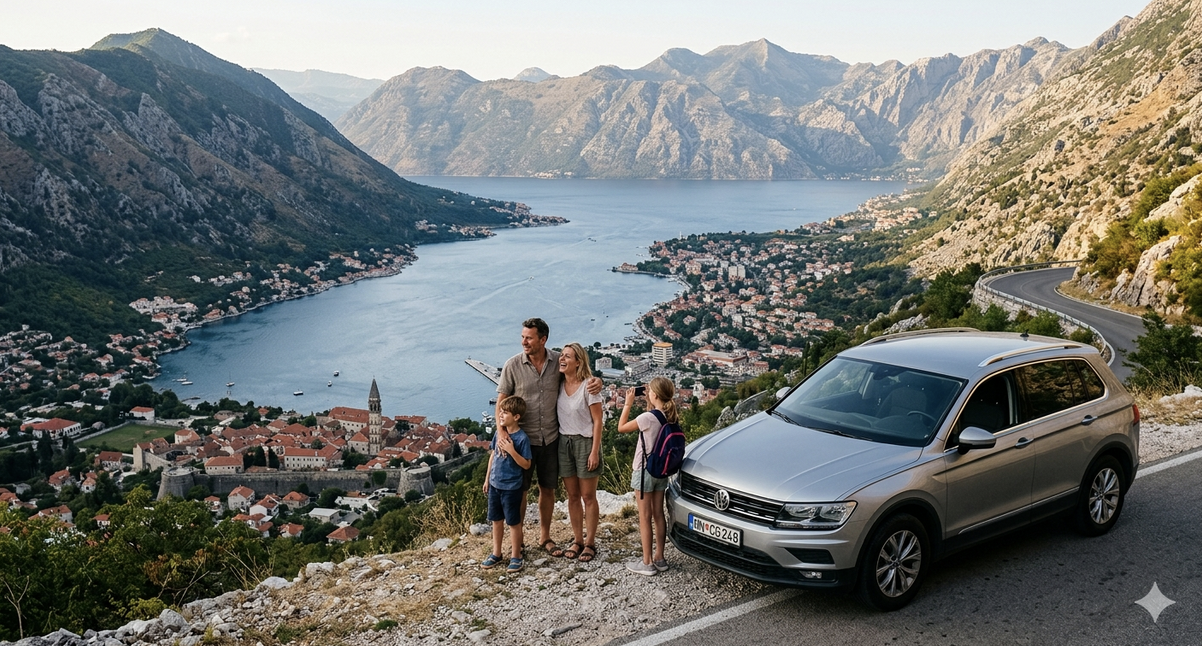
The thing that makes it genuinely brilliant for families – rather than just nice – is variety. You can do a beach morning and a mountain afternoon. Kids who are bored of sand get mountains. Kids bored of mountains get the sea back. The flexibility is real, and the distances are short enough that none of it feels like a chore.
The car is, genuinely, the whole point
Public transport in Montenegro exists. It just isn’t what anyone would call reliable. Buses connect the bigger towns, sure – but the places that actually stick in the memory? The hidden coves, the viewpoints that make teenagers voluntarily put their phones away, the mountain villages where you stumble across a bakery that changes your relationship with cheese pastry forever – those require a car.
Families who’ve done the trip tend to say the same thing unprompted: sorting car rental Montenegro before they arrived was the single best decision they made. No waiting for the next bus. No being stuck somewhere because the timetable was optimistic. Just the freedom to turn left when something looks interesting – which, in Montenegro, is roughly every ten minutes.
The roads do deserve an honest mention. Some of them are dramatic – the serpentine climb above Kotor involves 25 hairpin bends, and the first time you do it, your knuckles go slightly white. But the views from those same bends are absolutely extraordinary. It turns out even the most vocal backseat critics go quiet when the scenery outside looks like a screensaver.
A rough route that actually works
Ten to fourteen days is the sweet spot. Most families end up doing a loose loop – coast first, then inland – which means the scenery keeps changing and nobody gets bored. Here’s how it tends to flow:
- Kotor Bay – the obvious starting point, and for good reason. The old town is a UNESCO World Heritage Site, small enough to explore on foot, and absolutely overrun with cats (the local charity, Kotor Kitties, is a surprisingly big hit with younger visitors). Perast is a short drive along the bay and noticeably quieter – two tiny islands sit just offshore, one with a Baroque church on it, and boat trips out there cost next to nothing.
- Budva – Montenegro’s most popular resort, which means it’s busier but also has the best beaches for families with younger kids. Be?i?i, just to the south, is slightly more sheltered and a bit less chaotic in peak season.
- Sveti Stefan – you can’t actually stay on the island itself (it’s a private luxury resort now), but the view from the clifftop road above is one of those genuinely jaw-dropping moments. Worth the minor detour.
- Ulcinj’s Long Beach – all the way down near the Albanian border, this 13km stretch of sand is one of the longest in the entire Adriatic. Far fewer tourists, warm water, and the kind of unhurried pace that’s increasingly hard to find anywhere in summer.
- Durmitor National Park – this is the one. Head inland and the whole country changes character. The Black Lake sits over a mile above sea level; the Tara Canyon drops 1,300 metres and is crossed by a bridge that even confident adults find slightly nerve-wracking. Families can go white-water rafting, zip-lining, or just hike to the lake and eat sandwiches by the water. Even the kids who claimed to hate walking tend to come round up here.
What it actually costs to do this
Montenegro is cheaper than Croatia. Not marginally – meaningfully. A family of four eating out for dinner rarely spends more than €40–50, and that’s at a decent restaurant. Street food and bakeries are both excellent and absurdly good value. Accommodation in apartments – which work brilliantly for families – runs from around €30 to €100 a night depending on location and time of year.
“Montenegro remains one of the best-value destinations on the Adriatic for families who want quality without the price tag of Croatia,” says family travel specialist Rhian Thomas, who has run multiple group trips to the region. It’s a view echoed by a growing number of UK families who felt quietly priced out of the Dalmatian coast and went looking for an alternative.
Car hire from Tivat airport – where most UK direct flights land – starts from roughly €30 a day. Book ahead, especially for summer, and prices stay sensible.
A few things worth knowing before you book
Getting there: Jet2 flies direct to Tivat from Stansted and Manchester in around 2 hours 45 minutes. Shorter than a lot of domestic journeys, frankly.
Timing: Spring (April–June) and early autumn (September–October) are the sweet spots – better prices, fewer people, and weather that’s warm without being oppressive. July and August are great for beaches but the roads around Kotor Bay can get properly slow. Plan longer driving days for shoulder season if you can.
The Dubrovnik question: Some families fly into Dubrovnik and cross the border by car. It works, but the border queues in summer can be genuinely punishing – hours, sometimes. Flying straight into Tivat sidesteps the whole thing.
Money: Montenegro uses the Euro, which is handy even though it’s not in the EU. Cards are accepted almost everywhere in tourist areas; cash is worth having for markets, smaller towns, and the occasional roadside bakery that doesn’t have a card reader but absolutely has the best burek you’ve ever eaten.
Final thoughts
Montenegro is one of those places that feels almost disproportionately rewarding – like the effort-to-payoff ratio is slightly rigged in your favour. It’s small enough that a two-week road trip covers most of the highlights without anyone feeling rushed. It’s affordable enough that the holiday doesn’t come with a financial hangover. And it’s varied enough that every member of the family, regardless of age or enthusiasm level, ends up with at least one moment that genuinely sticks.
It’s getting more popular. That’s just a fact – visitor numbers have been climbing steadily, and the coastline especially is starting to resemble Croatia a decade ago. Which means right now is probably the best time to go: before the prices catch up, before the good apartments book out six months in advance, before the secret is entirely out. Worth the trip. Absolutely worth the drive.
