

Responsibility does not suddenly appear one day. It does not switch on at eighteen. It grows slowly, in small moments that barely look important at the time.
It grows when a child carries their own plate to the sink. When they remember to pack their school bag without being chased. When they notice the bin is full and take it out before anyone asks.
Family life today moves quickly. Work emails arrive before breakfast. School notifications ping during dinner. A parent might scroll briefly through something light like incaspin casino while waiting in the car park, then return straight to the list of tasks waiting at home. Everything overlaps. Everything competes for attention.
In that pace, it often feels easier to do things alone. Folding the laundry yourself takes five minutes. Teaching a child to fold it takes fifteen.
But those extra ten minutes matter.
Small Ways to Help Children Develop Responsibility Through Everyday Family Tasks are rarely dramatic. They look ordinary. They repeat quietly. Over time, they shape character.
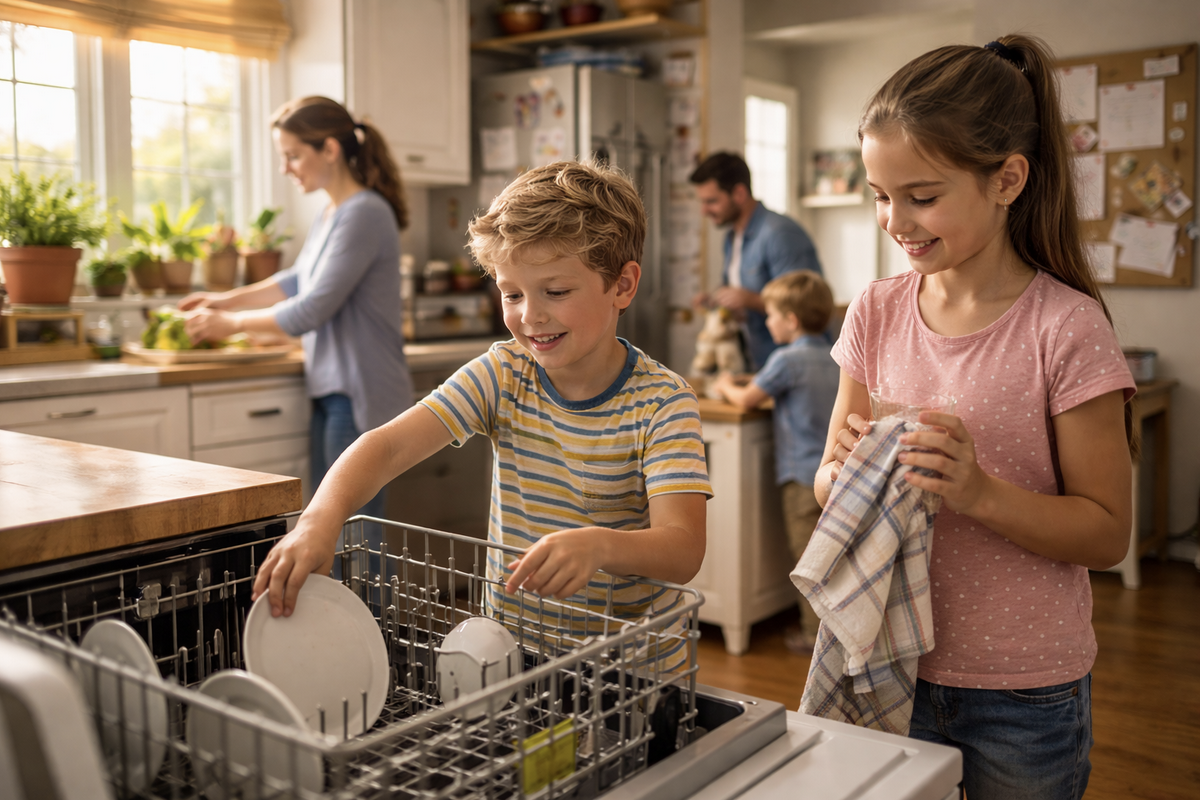
Responsibility starts in ordinary spaces
Children do not learn accountability from long speeches. They learn it from participation.
When a child sees that dishes do not magically clean themselves, that clothes do not return to drawers by accident, that someone must remember to feed the pet, something shifts. They begin to understand that homes run on effort.
Responsibility teaches several basic truths:
- Actions affect other people
- Shared spaces require care
- Time matters
- Follow-through builds trust
These lessons do not need grand explanations. They need practice.
Let them start small
Parents often underestimate what children can do. Even very young children want to help. They feel proud when adults treat them as capable.
Simple beginnings might include:
- Toddlers putting toys into a basket
- Preschoolers carrying napkins to the table
- Early primary children helping measure ingredients
- Older children organising their school items
- Teenagers cooking one meal per week
The goal is not perfection. It is involvement.
When children hear, “I need your help,” they feel important. That feeling supports responsibility far more than pressure does.
Do not link chores only to punishment
If children only clean when they misbehave, they start to associate responsibility with shame. That creates resistance.
Instead, present household work as something everyone shares.
Try phrases like:
- “We all take care of our space.”
- “This is part of being in the family.”
- “Let’s sort this together.”
The tone changes the message. Responsibility should feel normal, not corrective.
Make contribution part of daily rhythm
Habits stick when they attach to routine.
For example:
- Plates go to the sink immediately after dinner
- School bags get packed every evening
- A quick five-minute tidy happens before bedtime
When tasks follow the same pattern each day, children stop questioning them. They become part of how life works.
Small Ways to Help Children Develop Responsibility Through Everyday Family Tasks succeed because they repeat without drama.
Let them see the work behind the scenes
Many parents complete tasks quietly once children go to bed. While that keeps things tidy, it hides the effort that runs the household.
Invite children into real processes. Let them see how long it takes to prepare meals. Show them how laundry moves from basket to machine to dryer to drawer.
When children see the full cycle, they understand effort. They recognise that someone invests time daily to keep things running.
That awareness builds respect.
Accept imperfect results
Children will fold towels unevenly. They will forget steps. They will miss corners while cleaning.
Resist the urge to redo everything.
Correct gently. Demonstrate again. Allow improvement over time.
If parents immediately fix every mistake, children assume they cannot do it properly. That discourages effort.
Growth requires patience.
Give them ownership, not random requests
Consistency increases accountability.
Instead of saying, “Can you do this today?” consider assigning specific areas of responsibility.
For example:
- One child always empties the dishwasher
- Another handles recycling
- A teenager manages laundry on weekends
When a task belongs to them, children remember it more easily. Ownership creates identity.
“I am the one who feeds the dog” feels different from “Sometimes I feed the dog.”
Allow natural consequences
Responsibility strengthens when children experience results.
If they forget to bring homework, let them explain it at school. If they leave belongings outside and rain damages them, talk about it calmly.
Parents should keep children safe, of course. But small discomfort teaches more than constant rescue.
Actions link to outcomes. That connection shapes maturity.
Teach time awareness gradually
Responsibility includes understanding time.
Parents can support this by:
- Setting timers for homework blocks
- Breaking large tasks into steps
- Encouraging children to plan their own schedules
- Reviewing the week together on Sunday evenings
Children need practice managing time. They do not learn it automatically.
Short structured experiences build confidence.
Notice effort clearly
Praise should focus on effort and follow-through.
Instead of “You did that perfectly,” try:
- “I appreciate that you remembered without being reminded.”
- “I noticed how carefully you did that.”
This reinforces consistency rather than performance.
Children repeat behaviours that feel seen.
Involve them in problem-solving
Sometimes routines fail. Maybe mornings feel rushed. Maybe homework always starts too late.
Invite children into the solution.
Ask:
- “What would make this easier?”
- “How can we organise this better?”
- “What should we try this week?”
When children help design systems, they follow them more willingly.
Participation increases cooperation.
Responsibility includes emotional awareness
Household responsibility goes beyond physical chores. It includes noticing others.
Encourage children to:
- Check on a sibling who feels upset
- Offer help without being asked
- Write thank-you notes
- Remember family birthdays
These actions build emotional maturity alongside practical skills.
Responsibility grows in both visible and invisible ways.
Adjust expectations as they grow
Children outgrow tasks quickly.
A chore that once challenged them may become effortless. Increase complexity slowly.
Here is a simple growth pattern:
| Stage | Example Responsibility |
| Early Childhood | Tidy personal items |
| Primary School | Help prepare meals |
| Early Teens | Manage homework independently |
| Older Teens | Handle weekly cooking or budgeting |
Progression matters more than speed.
Model what you expect
Children watch everything.
If adults avoid tasks, complain constantly, or forget commitments, children notice.
Model responsibility by:
- Completing your own obligations consistently
- Admitting mistakes openly
- Following through on promises
Children learn far more from observation than instruction.
Keep warmth at the centre
High expectations without warmth feel heavy. Warmth without expectations feels directionless.
Balance matters.
Offer guidance when tasks feel overwhelming. Encourage effort during difficult weeks. Stay approachable.
Small Ways to Help Children Develop Responsibility Through Everyday Family Tasks work best inside supportive relationships.
Some days will not go smoothly
There will be evenings when no one wants to tidy. Mornings will sometimes feel rushed. That is normal.
Responsibility develops over years, not days.
Focus on consistency rather than perfection. Keep routines steady. Repeat expectations calmly.
Over time, children internalise the message: “I matter here. My actions affect this family.”
Final thoughts
Responsibility does not require strict systems or rigid discipline. It grows through repetition, trust, and involvement.
When children participate in everyday tasks, they feel capable. They understand contribution. They begin to see themselves as active members of the household rather than passive residents.
Small Ways to Help Children Develop Responsibility Through Everyday Family Tasks may look ordinary from the outside. Inside a home, they shape character quietly and steadily.
And that steady growth lasts far beyond childhood.
