

There’s a certain kind of wet Sunday afternoon where the kettle’s been on three times, the teenagers have vanished upstairs, and you find yourself watching a casino scene in a film thinking: I have absolutely no idea how that game works.
You’re not alone. Most of us know blackjack and roulette by sight and nothing more. So here’s a plain-English tour of the classic table games, how they work, what the odds really look like, and why some of them are kinder to your purse than others.
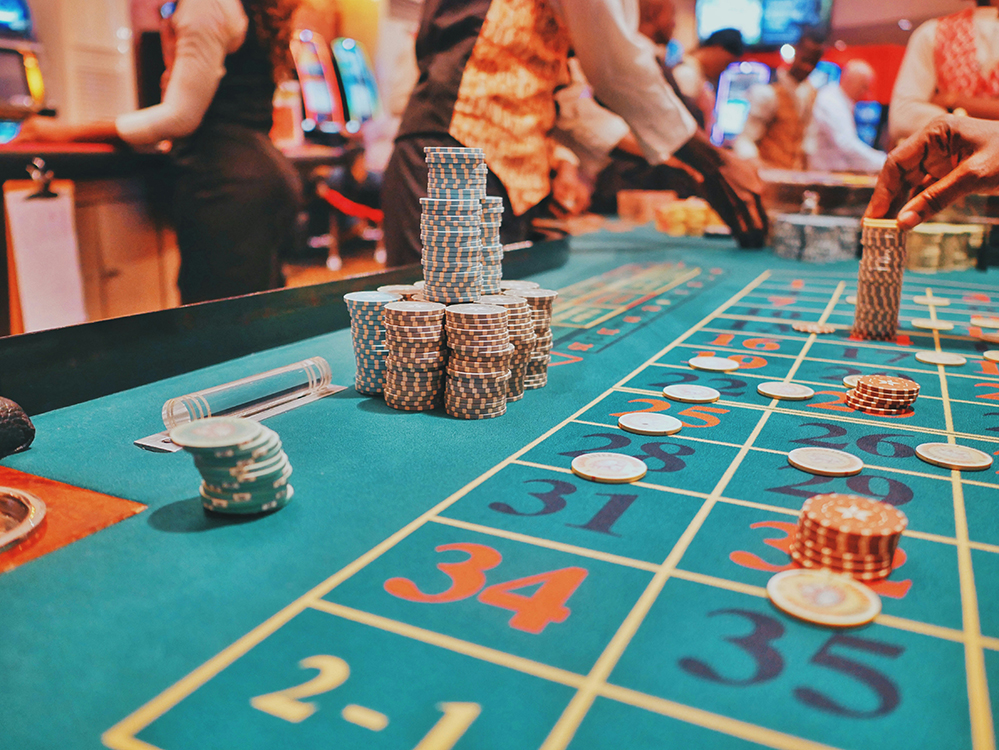
One thing worth knowing before we start. The online casino table games players can explore on the big platforms are the same handful of classics that have run in casinos for a couple of centuries. Learn four games and you’ve essentially learned them all.
Roulette, the one everyone recognises
The wheel, the little ball, the dramatic pause. You’re simply betting on where the ball lands, and you can keep it as simple as red or black.
The detail that matters is the zero. A European wheel has one green zero, and that single pocket is where the casino makes its money, a house edge of about 2.7%. American wheels sneak in a second zero and nearly double that to 5.26%. Same game, worse deal. If you’re ever given the choice, take the European wheel.
New players are often steered towards the outside bets:
- Red or black
- Odd or even
- High or low (1-18 / 19-36)
The payouts are smaller but they cover nearly half the board, so you get longer, steadier play for your money.
And a gentle warning about betting “systems” like the Martingale, where you double your stake after every loss. They’re popular, they feel clever, and they don’t work. The wheel has no memory, and no staking pattern changes that.
Blackjack, the thinking person’s game
Blackjack is the one where your decisions genuinely matter. Beat the dealer’s hand without going over 21, choosing when to take a card and when to stick.
Because there’s real strategy involved, blackjack has one of the friendliest house edges in the casino. Play by the basic strategy chart, a simple table showing the best move for every hand, and the edge drops below 1%. Some rule sets get it down to around half a percent. Nothing else on the casino floor comes close.
The chart isn’t cheating, by the way. It’s just maths, and casinos are perfectly happy for you to use it. Most players don’t bother, which suits the casino fine.
Baccarat, easier than the films suggest
James Bond made baccarat look impossibly sophisticated. In reality it’s the simplest game here. You bet on one of two hands, Player or Banker, and whichever lands closer to nine wins. That’s the whole game.
There are no decisions to make after you’ve bet, and the house edge sits around 1.1 to 1.5% depending on which side you back. Ninety seconds to learn, which is probably why it’s survived since the 1800s.
Craps, louder than it needs to be
The dice game with the crowd around it. It looks chaotic, and the table layout doesn’t help, but the core bet, the pass line, is straightforward and carries a house edge of only about 1.4%.
The chaos comes from the dozens of side bets stacked on top, most of which are far worse value. The simple bet is also the smart one, which is a rare bit of good news in a casino.
How the games compare
| Game | House edge | Skill involved? |
| Blackjack (basic strategy) | Under 1% | Yes, decisions matter |
| Baccarat | 1.1% to 1.5% | None, pick a side |
| Craps (pass line) | About 1.4% | None on the basic bet |
| European roulette | 2.7% | None |
| American roulette | 5.26% | None |
Two things jump out. The gap between the best and worst options is enormous, and the games needing zero skill span the whole range. Knowing which table to sit at matters more than anything you do once you’re there.
What the house edge actually means
That percentage is the slice the casino keeps over the long run. A 2.7% edge means that across millions of spins, about 2.7p of every £1 wagered stays with the house.
It is not a prediction for your afternoon. You might win, and that’s precisely what keeps it fun. But no streak, hunch, or “due” number changes the underlying maths. Treat a session the way you’d treat a cinema ticket, a known cost for a couple of hours’ entertainment, and the games make a lot more sense. It’s the same reason some games become part of daily life while others don’t: the ones that stick around are simple, sociable, and easy to enjoy in small doses. The classics have had two hundred years of practice at exactly that.
Where to play sensibly
If curiosity gets the better of you, do the boring checks first:
- Stick to sites licensed by the Gambling Commission
- Set a deposit limit before you play, not mid-session
- Decide what you’re happy to spend the same way you’d budget for any night out
- Treat winnings as a nice surprise, never a plan
Small rules, but they make the whole thing more fun, not less.
Conclusion
None of this will make you a winner, because nothing does, reliably. The house edge is the price of admission, and the games that have lasted two centuries lasted because they’re good entertainment at that price.
But ten minutes of reading does buy you something real. You’ll know why the European wheel beats the American one, why blackjack rewards a bit of homework, and why the simplest bet at the craps table is also the best one. On a rainy Sunday, that’s not a bad trade.

28 July 2026
I totally get that feeling – I’ve had a few of those Sundays myself! Blackjack is always so confusing to watch.