

The ring looks right. The monthly repayment looks manageable. Then you remember that the car insurance renewal and a school residential trip are both due in the same month.
Before choosing engagement ring finance, check the full amount you would pay and whether the repayments fit your household budget. A smaller monthly figure can mean paying for longer. Interest-free repayments still need room in the budget.
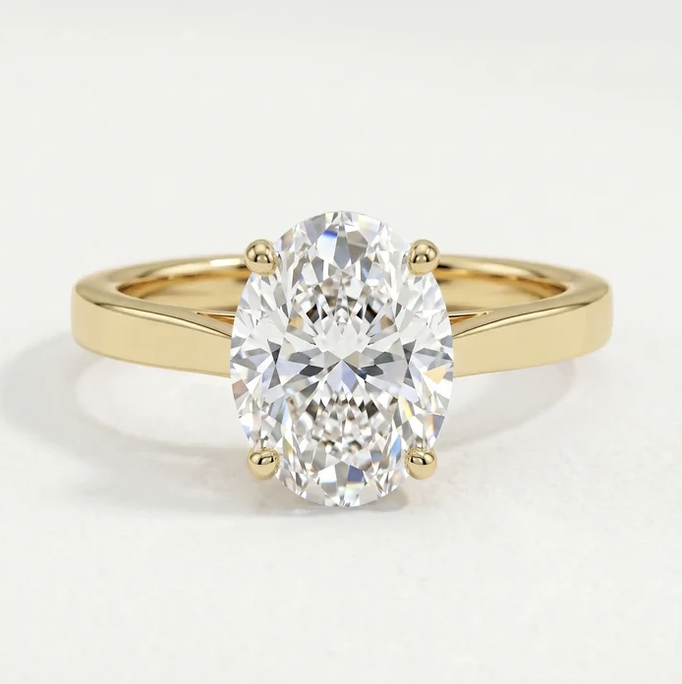
Start with the ring’s price
Set a spending limit before looking at instalments. Keep it tied to the complete ring you want, rather than letting a lower monthly payment persuade you to spend more.
To compare lab diamond prices in Lily Arkwright’s ring collection, use the exact stone, setting and metal you want. Starting prices may describe a different version; record your chosen ring’s confirmed price before comparing payment plans.
Check whether extras such as engraving are included. Keep the purchase quote separate so you can see what the ring costs and what borrowing adds.
Add up the whole payment plan
Record the deposit, number of repayments, payment amounts and any compulsory fees. Ask for the total you would pay, including money paid upfront.
These hypothetical illustrations use a £1,500 cash price. They are not finance offers from Lily Arkwright or any lender. Actual terms and eligibility vary; the totals include all scheduled charges and assume payments are made on time.
| Illustrative option | Paid upfront | Later payments | Total paid |
| Pay in full | £1,500 | None | £1,500 |
| 12-month 0%, no fees | £150 | 12 × £112.50 | £1,500 |
| 24-month plan | £100 | 24 × £70 | £1,780 |
The interest-free, fee-free example totals the same as paying upfront. The £70 plan costs £280 more despite its lower monthly payment. A longer term does not automatically add cost; compare the actual agreement.
Use the lender’s actual figures. Include any different final payment or separate fee in your comparison.
Put the repayments into a real family month
Look at the months ahead, including the expensive ones. School uniforms, birthdays and annual insurance bills do not disappear because a ring payment has become a regular outgoing. Keep money for essential bills and emergencies outside the ring budget.
MoneyHelper’s budget planner adds up income and outgoings to show what remains. Annual costs can be converted to monthly averages, helping you allow for irregular bills. Check when each bill actually falls due, too.
Add existing credit commitments before deciding what is available for another repayment. If your income varies, test the plan against a quieter month rather than relying on overtime or a bonus that might not arrive.
Saving first or choosing a less expensive ring are options too. You can get engaged before making the larger purchase.
Read past the words ‘interest-free’
Check the lender, agreement type and payment dates. Equal instalments and a deferred lump sum create different demands on your budget.
MoneyHelper’s guide to store credit notes that some catalogue arrangements charge interest from the purchase date if an interest-free deadline is missed. Other plans work differently: check the terms of the one you are offered.
Ask for the annual percentage rate (APR), where applicable, alongside the total you will pay. Check late-payment charges and whether applying involves a credit search.
Qualifying third-party Buy Now Pay Later agreements made from 15 July 2026 are regulated by the Financial Conduct Authority (FCA). This change covers certain short-term, interest-free arrangements; it excludes agreements provided directly by the retailer. Check which protections apply to yours.
Keep the payment details with the ring paperwork
Save the ring specification, quote and finance agreement together. Note the lender, payment dates and where to check your balance. MoneyHelper’s Buy Now Pay Later guidance recommends tracking every payment, particularly if you have several agreements. If you may miss a payment, contact the lender before it falls due.
Before buying, ask how a return, cancellation or change to the order would be handled by both the retailer and lender. If a problem arises, contact both as appropriate and confirm what happens to the repayment schedule. Do not assume that sending a ring back automatically pauses a payment.
Then close the calculator and think about the ring. A favourite design should still appeal at its full price. If the repayments squeeze an already busy household budget, give yourselves room to choose differently.
